
Sensory overload can make an ordinary place feel suddenly unmanageable. The music is still playing at the same volume. The lights have not changed. Yet conversation, movement and noise now seem to arrive all at once.
This guide explains sensory overload in adults, why your threshold can vary, and the main ways to reduce the load. If you need something practical right now, go straight to dealing with sensory overload in the moment.
What is sensory overload?
Sensory overload describes becoming overwhelmed by sensory input. That might involve sound, light, touch, smell, taste, movement or sensations inside your body. One intense sensation can be enough; several ordinary sensations can also become difficult together.
It is a description of an experience, rather than a diagnosis you can establish from a checklist. It does not mean that you are being dramatic, difficult or insufficiently resilient.
Some autistic, ADHD and AuDHD adults recognise this experience. Others notice sensory difficulties without knowing whether a diagnostic label fits. You can take your needs seriously while exploring what is happening.
For a shorter introduction, the free Knowledge Hub explains what sensory overload is.
What can contribute to sensory overload in adults?
The source is not always an unusually loud or bright environment. Sometimes several demands overlap, and you have little control over their timing.
| Source of input | An everyday example | An adjustment to consider |
|---|---|---|
| Sound | Music, appliances and several conversations competing | Turn off one source or move to a quieter part of the room |
| Light and visual activity | Harsh lighting, moving screens or a busy shopping centre | Reduce glare or choose a less visually busy space |
| Touch and temperature | An irritating seam, unexpected touch or an overheated room | Change the clothing or conditions you can control |
| Smell and taste | Strong perfume, cooking smells or an uncomfortable food texture | Move away from the source or choose a tolerable alternative |
| Movement and crowding | People passing close by while you are trying to navigate | Pause at the edge of the space or use a quieter route |
Conversation, decisions and unexpected changes can add further demands while you are trying to manage that input. They are useful context, even though they are not all sensory experiences themselves.
Imagine a kitchen where an appliance is running, someone is talking and your phone keeps buzzing. The final question may seem to trigger the reaction, but it may be only the last part of an already demanding situation.

Why the same place can feel different on different days
Your sensory experience does not have to be consistent to be real. A supermarket you managed yesterday might feel much harder after poor sleep, illness, stress or a day without enough recovery.
It can help to consider both the environment and what you were carrying into it. You might notice that background noise is harder late in the day, or that an outing takes more effort after a busy morning.
Those observations are starting points for reflection. They do not prove that one factor caused another. Two people can also experience the same room very differently.
Common experiences: what you might notice
Some people notice that sounds become harder to separate or that light and touch demand more attention. Others first notice impatience, restlessness, tension, difficulty following speech or a strong need to leave.
Overload may be visible as distress, tears or agitation. It can also be quiet: continuing with a task while finding it increasingly difficult to think or communicate. Someone appearing withdrawn may need less input and more time, rather than more questions.
These experiences overlap with anxiety, fatigue and other health concerns. They are not enough to identify a cause on their own. The supporting guide to what sensory overload feels like and body signals to notice explores that experience in more detail.
People sometimes use the words meltdown or shutdown for responses to overwhelming demands. Neither happens to everyone, and recognising overload does not require reaching that point.
Coping: reduce the load before adding another task
Start with the smallest useful change that is available. It might be lowering one sound, moving out of a busy doorway, adjusting uncomfortable clothing or pausing a conversation.
A strategy is useful if it suits you in that setting. A fidget tool may help one person and add irritation for another. Focusing on breathing can be comforting for some people and uncomfortable for others. You do not have to complete a regulation exercise before you are allowed to leave a difficult environment.
The in-the-moment guide offers a short sequence for reducing input, finding space and recovering. For preparation, the Knowledge Hub guide to creating a sensory toolkit can help you choose tools you already find useful.
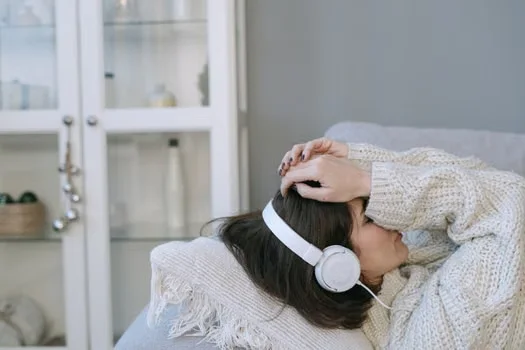
Make communication easier before you need it
Explaining everything while overloaded can become another demand. A saved message such as “I need a quieter space; please give me a few minutes” can be enough.
When possible, agree on a simple signal and a practical response with someone you trust. Decide whether you prefer company, space, a written question or help leaving. There is no universal preference.
Use the communication tools for sensory overload for adaptable scripts and a plan for moments when speaking is difficult.
Recovery and the wider pattern
Leaving the environment does not always mean feeling ready for the next demand. You might need fewer conversations, comfortable surroundings or a period with less to decide. Recovery varies; there is no fixed time you should be back to normal.
Sensory overload and burnout are not interchangeable. If difficulties extend across days or weeks, consider the broader changes in your energy, functioning and recovery rather than attributing everything to one outing. The AuDHD burnout resources and Understanding Burnout guides offer further context.
When you have capacity, a few notes may help: what input was present, what changed first, what helped and how you felt afterwards. You can use paper or any method that works for you. If you prefer a private place to gather those observations, AuDHD Companion's daily check-ins and personal pattern insights can support reflection on sensory load alongside sleep, energy and overwhelm. Patterns suggest questions to explore; they do not diagnose a condition or establish a cause.

When to ask for support
If sensory difficulties are new, worsening, painful or regularly affecting daily life, speak with a qualified health professional. You do not need a complete record or a confirmed diagnosis before asking for help. Avoid assuming that a new physical symptom is simply overload.
This article is for general education and self-understanding, not personalised medical advice. For further information, see the National Autistic Society's sensory processing guidance.