
Sensory overload can be difficult to name while it is happening. You might notice your jaw tightening, an ordinary sound becoming impossible to ignore, or the words in a conversation becoming harder to follow.
This guide focuses on the experience in your body and senses. For definitions, possible contributors and the broader coping picture, start with Sensory Overload in Adults: What It Is and How to Cope. If you need help now, use the in-the-moment strategies.
What does sensory overload feel like?
There is no single sensation that identifies it. Some adults describe pressure, agitation or feeling crowded by sound. Others notice discomfort, difficulty concentrating, a strong need to leave, or a wish for everything to become quieter.
The useful clue may be a change from your usual experience: a seam you could ignore becomes distracting, or you can hear several conversations but cannot comfortably follow one.
You do not need to experience every sign below. These are descriptions people may recognise, rather than a symptom checklist or a way to diagnose yourself.
Changes in your senses
You might notice:
- Background sounds competing with the voice you are trying to hear.
- Light or movement drawing your attention away from what you are doing.
- Clothing, a chair or unexpected touch becoming uncomfortable.
- Smells or textures feeling harder to tolerate.
- Wanting to cover your ears, look away or move farther from people.
These changes may appear together or involve just one sense. They do not always build in a predictable order. If sound becomes especially difficult when you are depleted, why noise can feel harder when you are tired offers further reflection.
Physical tension and restlessness
Some people notice a clenched jaw, raised shoulders, fidgeting, pacing or a sense that sitting still takes more effort. You might become aware of feeling hot, a faster heartbeat or general discomfort.
Those sensations can have many causes. Anxiety, fatigue, illness and other health conditions can overlap with what people describe as overload. A physical sensation on its own cannot tell you why it is happening.
For example, you might only realise how tense you were when you leave a busy room and your shoulders drop. That observation can help you describe the experience without establishing a medical explanation for it.
When thinking and words become harder
Another signal may be the effort of processing information. You hear a question but need longer to understand it. You lose your place, cannot find a familiar word or find a small decision unusually difficult.
Others may see silence or a short answer. Inside, you may be working hard to understand what is being asked. More questions can feel like more input, even when the person asking means well.
A saved message or agreed signal can reduce the need to explain in that moment. The communication tools guide offers examples you can adapt when you feel able.
Irritability, withdrawal and wanting to leave
Sometimes the first thing you notice is impatience. A repetitive noise feels unbearable, an interruption becomes difficult to handle, or you find yourself searching for the exit.
That does not automatically mean you are angry with the person in front of you. It may be useful information about how much you are managing. It also does not remove responsibility for how you treat someone; a pause and a later repair can both matter.
Some people become visibly distressed, while others become quieter or more withdrawn. No outward reaction proves how much discomfort someone is experiencing. The Knowledge Hub explores irritability when overloaded in more detail.
Notice a sequence rather than scoring symptoms
If reflection feels useful, choose one recent situation and describe it in plain language. You do not need to repeatedly check your body or monitor every sensation.
| What to notice | A possible observation |
|---|---|
| What was happening? | “There was music, a conversation and a queue.” |
| What changed first? | “I stopped being able to follow the conversation.” |
| What did I do? | “I became quiet and moved toward the door.” |
| What helped? | “Having fewer questions and somewhere less busy.” |
| What happened afterwards? | “I needed a quieter evening than expected.” |
Look for your own repeated experiences, including occasions when the same setting felt manageable. Sleep, stress, health and earlier demands can provide context, but an association is not proof of a cause.
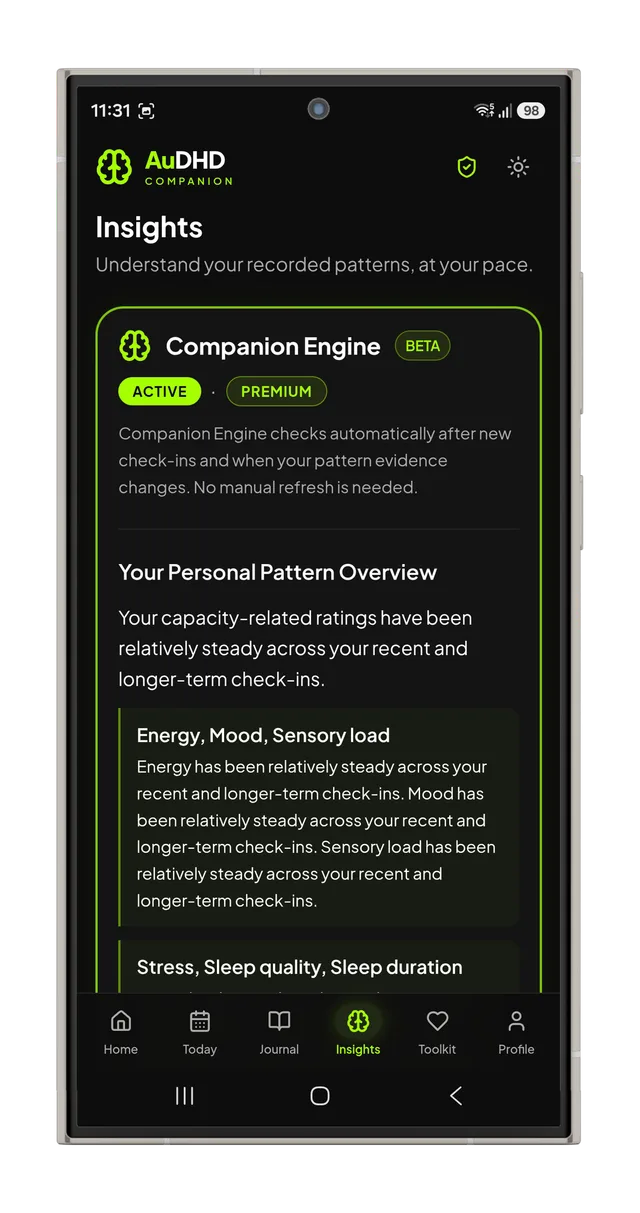
You can keep a note or use AuDHD Companion's daily check-ins and personal pattern insights if that makes reflection easier. Tracking is optional, and it can wait until you have recovered.
What if I only recognise it afterwards?
That can happen. During a demanding moment, you may have little attention available for explaining what you feel. Later, you might recognise the sound, tension or effort that you had been tolerating.
Hindsight can still be useful. Pick one adjustment for a similar situation, such as a quieter position or permission to pause a conversation. You do not have to catch every early signal to deserve support.
For the practical next step, read how to reduce sensory input in the moment. If exhaustion or reduced capacity continues across many settings, consider the wider context with the burnout resources.
When to seek health advice
Avoid assuming that pain, a new physical symptom or a change in speech or awareness is sensory overload. Seek appropriate medical help for symptoms that are sudden, severe or concerning. For everyday sounds that feel persistently too loud or painful, the NHS guidance on hyperacusis recommends speaking with a health professional.
This article supports general self-understanding, not diagnosis or personalised medical advice. You can explore related topics in the free educational Knowledge Hub without needing to identify a diagnostic label first.